On this page
- Both E2060 and E12 point to scale inside the heat pump. 1
- The DWHD660EFM manual shows E:20-60 blinking and calls it a calcified heating element; the first step is also to descale. 4
- Thermador's three steps: hottest regular cycle without detergent or dishes, descaler after 30 minutes, one more wash. 2
- Softener salt prevents a repeat, but not every model uses salt. 12
What do E2060 and E12 mean on a Thermador dishwasher?#
Both describe limescale inside the heat pump. Thermador's error-code page says the dishwasher needs descaling for E2060, and for E12 it says to use a descaler on hard-water deposits. 1
The heat pump warms the water, and mineral scale insulates it the way a crust inside a kettle does. The dishwasher notices, and it tells you before the scale hurts the wash. On the DWHD660EFM the display shows the same event as E:20-60 lighting up alternately, which the manual explains as a calcified heating element, with descale as the first step. 4 The two pages use different words for what is clearly the same job. Our rows for the two codes: E2060 and E12.
If your display shows something else, check the other E-codes in our breaker reset guide or the guide to reading the number.
How do I descale a Thermador dishwasher?#
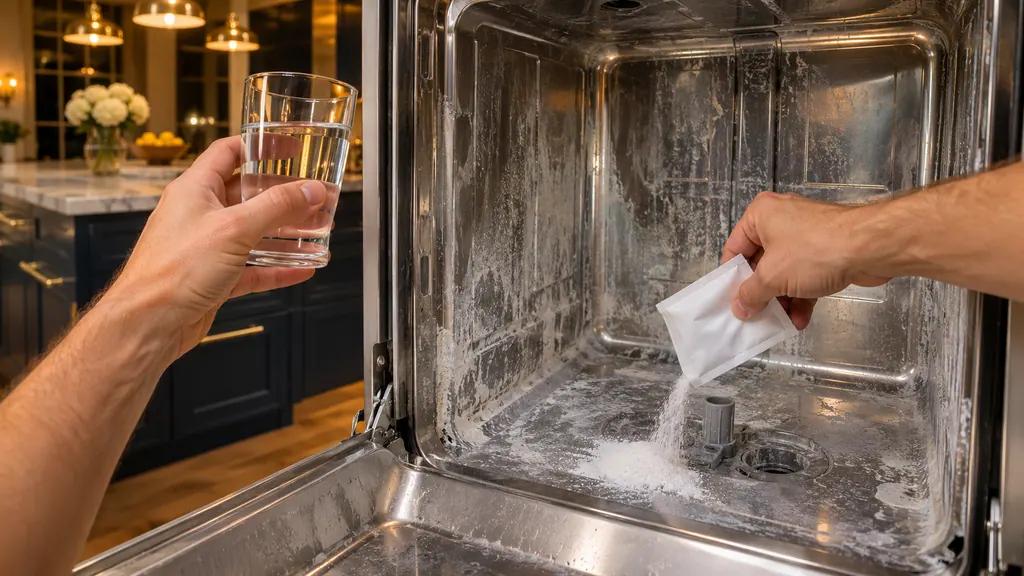
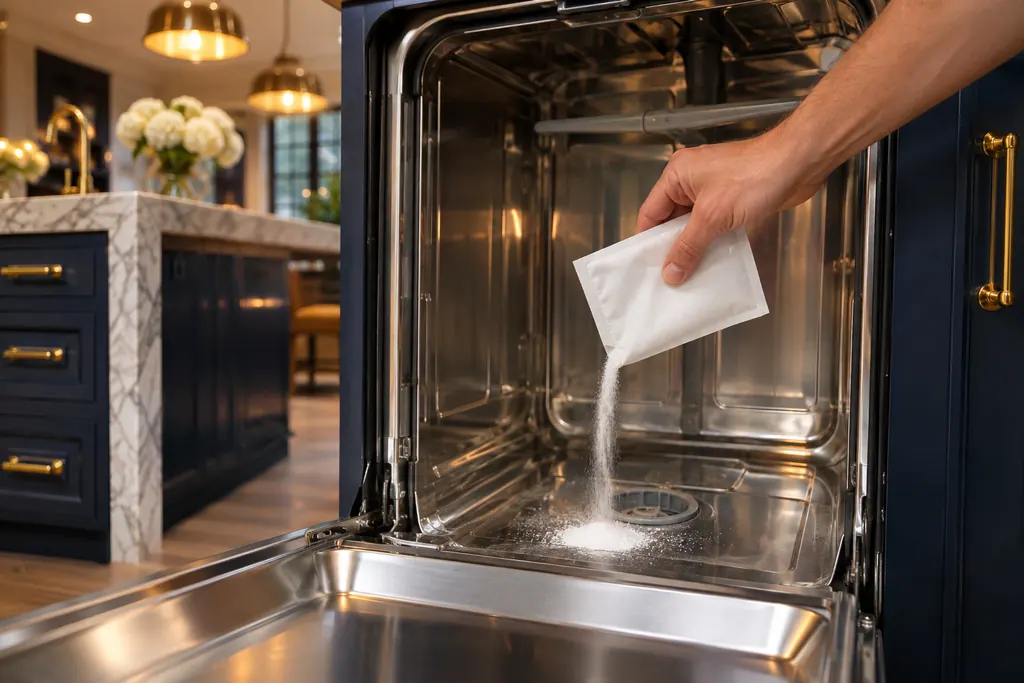
Run the hottest regular cycle with no detergent and no dishes. After 30 minutes open the door carefully and put the descaler in the bottom, close it and let the cycle finish. Then run one more full wash. 2
Those three steps come from Thermador's care page, and they are everything the page says. It does not name a quantity of descaler; it points you to the product label. Pour what the label states, no more.
- 1
- 2
- 3
- 4
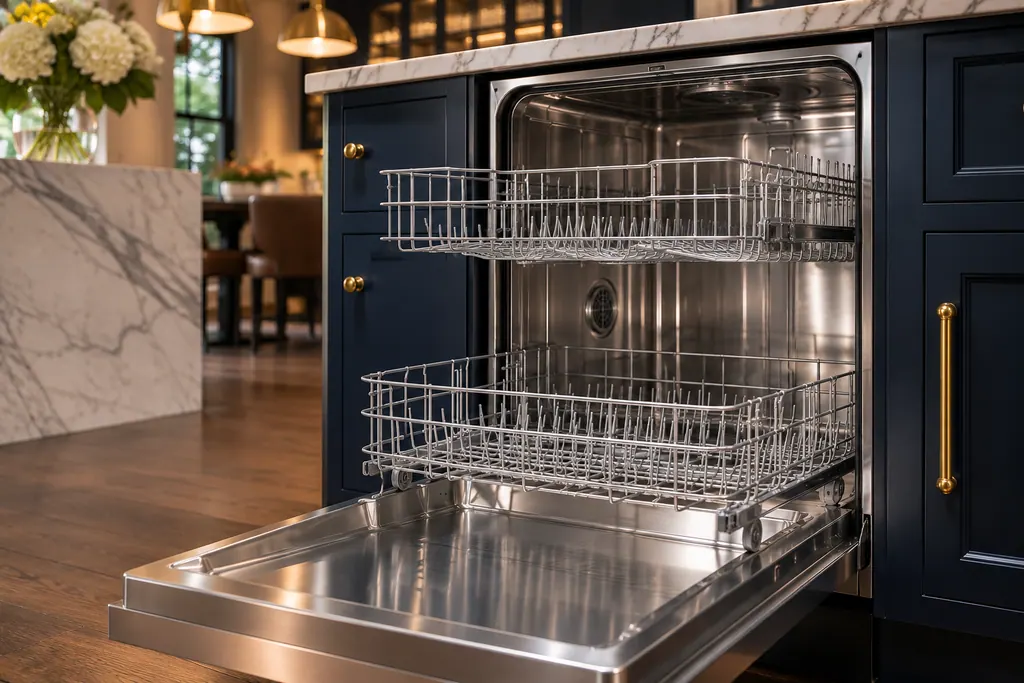
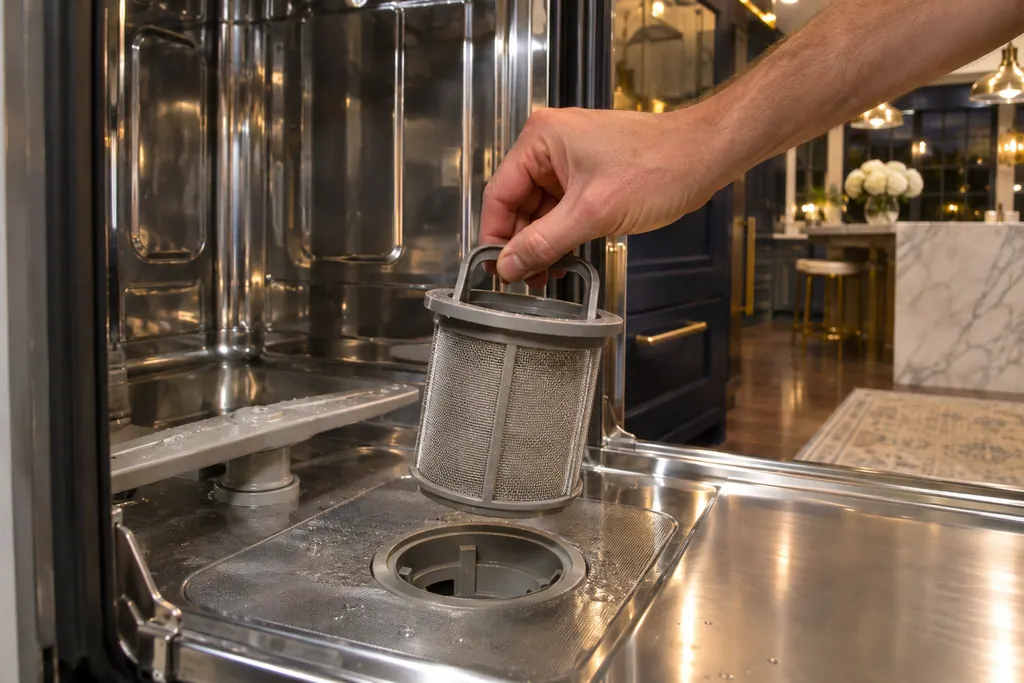
While the tub is empty, look at the filter. A filter clogged with scale flakes or food hurts the next cycle, and the manual points to the filter system for cleaning after each wash. 4
How often should I descale?#
Thermador's care page says to descale whenever limescale deposits show, and recommends every three to six months. In a hard-water area the sooner end of that range makes sense, because scale forms faster. 2
A few signs of scale before a code ever appears: a white coating on utensils or inside the tub, glassware that looks cloudy, and wash cycles that run longer. The appliance-features page lists the white coating and tells you to use a descaler, which also prevents damage to the heating system. 3 A cloudy glass that stays cloudy after a vinegar rinse is etching, not scale, and no descaler will remove it. 3 The same page suggests keeping detergent amounts in line with your water hardness, and raising the rinse aid setting if spots persist, which is cheaper than letting scale build up. 3
What does softener salt have to do with it?#
It slows scale at the source. The error-code page recommends softener salt, if a softener is built in, to avoid a repeat, and the care page defers to your owner's manual on how often to add it. 12
Be careful with the "if." The care page says not all Thermador dishwashers use softener salt. Check your manual before you buy anything. On models that do, a salt cap that is not closed properly can leave a salt coating in the tub, which the appliance-features page lists as its own cause of a white film. 23 The DWHD660EFM manual's E:20-60 row pairs the descale with running the appliance with its water softening system, where fitted. 4
Why does the dishwasher run longer when water is cold or scale is present?#
Thermador's troubleshooting page lists reasons for a long cycle, and two of them involve the heat pump: incoming water that is not hot enough, and a dishwasher connected to a cold supply. In both cases the cycle stretches while the heat pump warms the water itself. 5
The page offers two small fixes. Run the hot tap at the sink nearest the dishwasher for a moment before you start, or connect the dishwasher to a hot water source. It also names heavy soil and an empty rinse aid dispenser as reasons a cycle runs long. 5 None of this is limescale, but a heat pump that works harder to warm cold water is a good reason to keep it free of scale, so a kitchen with a long-running dishwasher and a hard-water film is a fair candidate for a descale.
What about white stains inside the tub?#
White mineral stains come from hard water, and dark or rust-like marks usually come from silverware touching the tub. Thermador's care page treats them separately. 2
For the white film, a dishwasher cleaner breaks down the mineral build-up. For marks on the tub, keep silverware from touching the wall during the cycle. The same page adds a rule: never use a steam cleaner on the dishwasher. 2 That is a cleaning job, not a code job, so a stain alone is no reason to expect E2060, but a tub with a heavy white film is a good moment to descale anyway.
What if the code returns after descaling?#
Then scale may be only part of it. Check that the descale ran in full, that the salt level and setting suit your water, and that no second code appears. If E2060 or E12 returns soon, the heat pump needs a closer look. 14
Note the date of the last descale and the code. A technician can compare that interval with your water hardness. Do not keep repeating descale cycles; each one runs hot water through the same heat pump, and a repeated code is information.
When does scale become a service call?#
A service call is the right move when the code returns after a careful descale, when a heater or heat pump code such as E2030, E6001 or E6002 joins it, or when the dishwasher cannot run a hot cycle at all. 14
Thermador's page lists its own support number for those cases. If you would like an independent technician, request a visit from us. A machine inside Thermador's coverage is repaired by Thermador, while our own work has a workmanship warranty. We settle the price with you before starting, and the final amount comes after the technician has examined the machine in your home. The dishwasher service page shows what is covered.
Sources#
- Error Codes | Dishwashers Support | ThermadorThermador (thermador.com, US support site) · Page undated; retrieved 12.11.2026 · Entries E12 and E2060
- Cleaning & Care | Dishwashers Support | ThermadorThermador (thermador.com, US support site) · Page undated; retrieved 12.11.2026 · Entries How Often and How Do I Descale My Dishwasher?, How to Use Softener Salt, How to Clean Stains in the Dishwasher
- Appliance Features | Dishwashers Support | ThermadorThermador (thermador.com, US support site) · Page undated; retrieved 12.11.2026 · Entry There is white coating or limescale on the utensils or inside the dishwasher
- Use and care GUIDE: Dishwasher DWHD660EFMThermador (BSH Home Appliances), en-us edition · File tag 9001862916_C · PDF page 33 (troubleshooting, E:20-60)
- Troubleshooting | Dishwashers Support | ThermadorThermador (thermador.com, US support site) · Page undated; retrieved 12.11.2026 · Entry The dishwasher is running for a long time